The Jacksonville Farmers Market at 1810 W. Beaver St., about a mile west of downtown off I-95 and I-10, closes completely on only two days a year. One is Thanksgiving, which falls on Nov. 26 this year, and the other is Christmas. Every other day it opens at 7 a.m., or 9 a.m. on Sundays. Between now and mid-December, the North Florida and South Georgia citrus crop runs on a short harvest deadline.
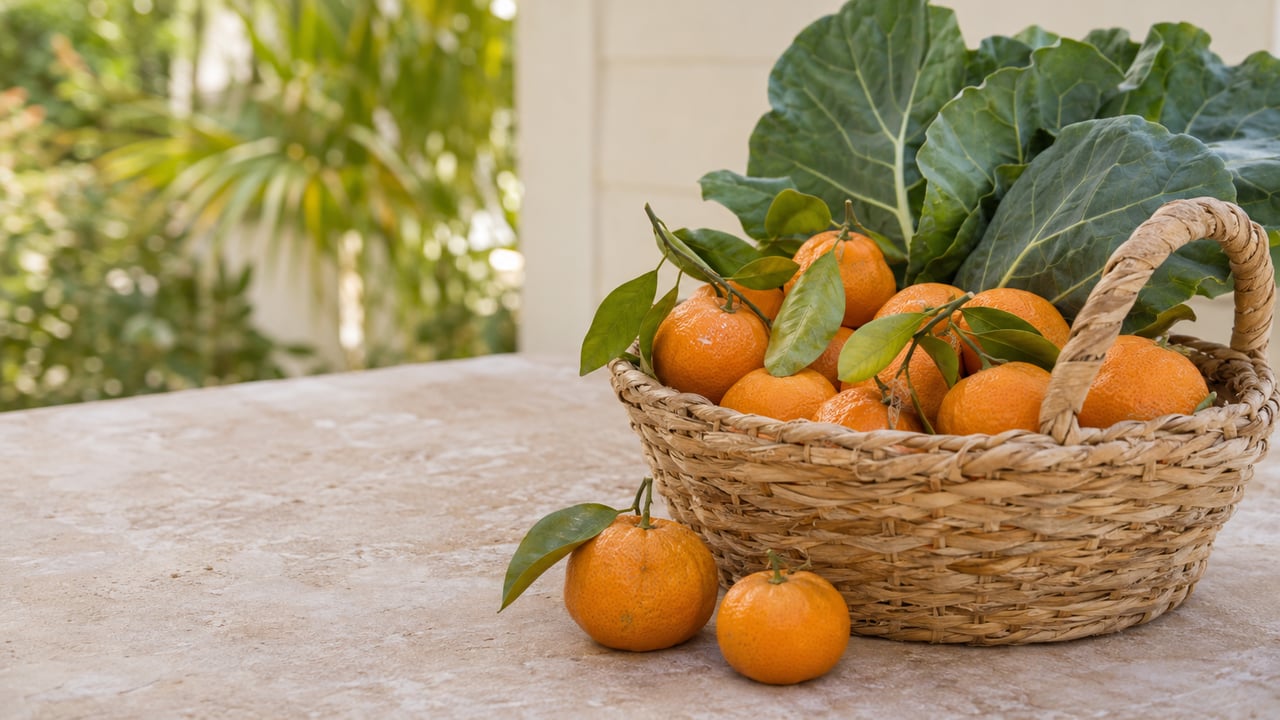
That deadline belongs to the satsuma. UF/IFAS horticulturist Muhammad Shahid told Citrus Industry that satsumas make up most of the citrus acreage in the cold-hardy belt across North Florida, South Georgia and Southeast Alabama. He also said the fruit "doesn't hold well on the tree," so growers have to pick it between mid-November and mid-December. Counting from the Friday after Thanksgiving, that leaves about three weeks of picking.
Why the satsuma window closes so fast
Most citrus can sit on the tree for weeks after it ripens. Satsumas can't, so a grower who waits loses fruit. Shahid described a region of 7,000 to 8,000 acres of citrus as of late 2024 that is still growing. He also said new growers call him often about planting.
The trees are tough. In the last week of December 2022, the region had five straight days below freezing. About 95% of that year's crop was lost, but the satsuma trees survived and had come back with a bumper crop by 2024. Researchers at the UF/IFAS North Florida Research and Education Center in Quincy are testing about 30 varieties to stretch the harvest past the satsuma window. Shahid named UF-905, which he described as sweet, easy to peel and ripe in December, and a variety called Marathon.
On Beaver Street, that means a December satsuma is a different purchase from a navel bought in February. It comes from a regional crop whose picking ends around mid-December.
The greens come from closer than the citrus
The vegetable stalls have their own regional supply line. Assistant general manager Mitch James told News4Jax in May 2025 that the market has "about five or six that come from west of Jacksonville, predominately going out towards Live Oak that bring in cabbage, greens, broccoli, peppers." He said the short drive keeps fuel costs down, and that keeps wholesale and retail prices down.
Collards, cabbage and broccoli are cool-season crops in North Florida, and UF/IFAS Extension's October 2026 fall-garden advice notes that leafy crops can be harvested again and again through the season.
We asked a similar question last month about where Mayport shrimp actually comes from. The farmers market answers it more directly, because many of the people at the tables work with the growers, and some of them are the growers.
A smaller Florida citrus crop this winter
This season's statewide citrus numbers make the regional crop worth noticing. USDA's first forecast for the 2026–27 season came out Oct. 9, as reported by Citrus Industry. It put Florida's orange crop at 10 million boxes, 23% below last season's 12.95 million. Florida grapefruit was forecast at 1.3 million boxes, down from 1.35 million, and tangerines and mandarins at 450,000 boxes, down from 460,000. Florida Citrus Mutual CEO Matt Joyner called last winter's freezes "a speed bump on our road to recovery." He said growers are reporting healthier trees and better fruit quality.
Florida citrus is still in season even with a smaller crop. The Florida Department of Agriculture's December shopping list includes oranges, grapefruit, tangerines and strawberries. Its crops-in-season chart runs oranges from September through June and Florida strawberries from December through April. After the satsumas, the next fruit is the Minneola tangelo, sold as the Honeybell, which UF/IFAS lists from December through February. UF/IFAS's home-citrus guide lists January for navel oranges and Ruby Red grapefruit.
Put together, the winter fruit comes in a rough order. Satsumas peak from late November to mid-December. Honeybells and the first Florida strawberries arrive as December goes on. Navels and grapefruit carry into January.
Who is on the roster
The market's online vendor directory isn't dated, so it's a place to start, not a guarantee of who will be there on a given morning. It lists:
- Larry Miller's Produce for whole and cut greens
- Mary's Produce for cut greens and bagged stir-fry mixes
- David's Produce for fruits and vegetables at wholesale prices
- Gee's Peanutes for boiled peanuts
- Ty's Juices for fresh sugarcane juice
- Green Spot for plants, fruit trees, herbs and hanging baskets
For the holidays, cut greens from Larry Miller's or Mary's take most of the work out of a pot of collards. Green Spot sells fruit trees, so you can taste a satsuma at one stall and look for a tree a few stalls over.
In February 2026, the UNF School of Communication profiled L&B Backyard Honey, a Duval-area backyard apiary at the market known for whipped, flavored honey. Blume's Grill & BBQ is listed at the market's address, serving breakfast, sandwiches, pulled pork, smoked wings, ribs and smoked mac and cheese.
The market sells both wholesale and retail. Restaurants, produce stands, stores and institutions buy wholesale, and the public shops retail at the same stalls. In May 2024, News4Jax counted 100 produce stalls with farmers from around the area.
Eighty-eight Decembers on Beaver Street
The market opened in 1938 as the Jacksonville Produce Market. Beaver Street Fisheries bought it from the founding family in 1986, according to a 2012 interview in the Jax Daily Record. An overpass expansion forced a move in 2006. The market was rebuilt in 2007 on its original land plus adjacent parcels. Jacksonville Today calls it Florida's oldest continuously operating farmers market and the only one in the state open seven days a week.
Some stalls go back decades. For the market's 75th anniversary in 2013, the Florida Times-Union profiled Dover's Produce, a stand one family has run for generations, and Mary Evans, whose father George began selling produce at the market in 1956.
The market is still investing. In July 2026, the Jax Daily Record reported a city permit for a 1,500-square-foot walk-in cooler at the market, with Don Hardin Construction as contractor at $101,841.
Planning around the holiday hours
Regular hours are 7 a.m. to 5 p.m. Monday through Saturday and 9 a.m. to 4 p.m. on Sunday. The market is closed Thanksgiving and Christmas Day. It closes early on Christmas Eve, New Year's Eve and New Year's Day. Since Sunday opens two hours later, a satsuma run on a weekday or Saturday morning gets you there first.
The market is one of more than 100 businesses in the Rail Yard District. In a 2024 News4Jax story, neighborhood leaders described the district's connection to the Emerald Trail, whose LaVilla link opened to the public in May 2024. Our fall guide to the Emerald Trail segments open now maps that route, so a December Saturday can start on the trail and end with a bag of satsumas and some boiled peanuts from Gee's.
I've always loved how much of Northeast Florida's calendar is set by what's growing, running or blooming close to home. If you're thinking about a home where a weekly stop at Beaver Street, or a satsuma tree in the backyard, fits your life, reach out to Donna S Osteen and we can start looking together. Schedule Your Consultation.